Xiamen Tmax Battery Equipments Limited was set up as a manufacturer in 1995, dealing with lithium battery equipments, technology, etc. We have total manufacturing facilities of around 200000 square foot and more than 230 staff. Owning a group of experie-nced engineers and staffs, we can bring you not only reliable products and technology, but also excellent services and real value you will expect and enjoy.
Vacuum Microwave Tube Furnace: Advanced Thermal Processing Technology for High-Precision Materials
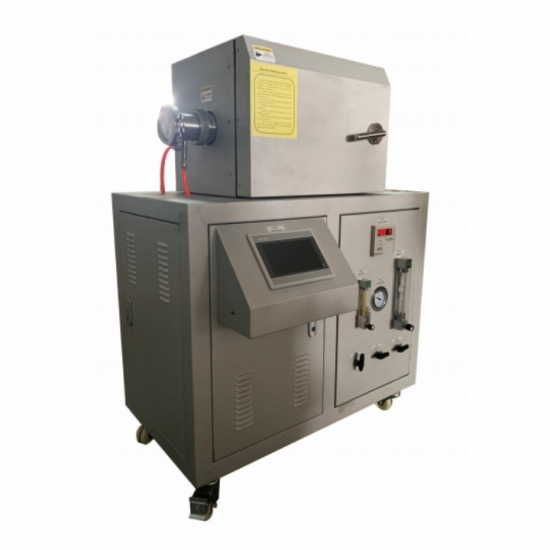
The Vacuum Microwave Tube Furnace is a high-performance thermal processing system designed to meet the demanding requirements of modern materials research, energy storage development, semiconductor fabrication, and advanced powder metallurgy. By integrating microwave heating technology with a fully sealed vacuum environment, this furnace delivers rapid, uniform, and energy-efficient heating while preventing oxidation or contamination during thermal treatment. As industries move toward higher precision and more efficient production methods, the vacuum microwave tube furnace has become a preferred solution for laboratories and manufacturing facilities worldwide.
1. Working Principle and Heating Mechanism
Unlike conventional electric resistance furnaces that rely on external heat conduction, the vacuum microwave tube furnace utilizes high-frequency microwaves to directly couple with materials. When microwaves penetrate the tube chamber, dielectric, magnetic, or conductive materials absorb the energy and convert it into heat at the molecular level. This method enables:
* Volumetric heating, where the entire body of the material heats simultaneously
* Fast temperature rise, significantly reducing processing time
* Enhanced thermal efficiency, lowering overall energy consumption
* Selective heating, allowing targeted heating of microwave-responsive materials
The addition of a vacuum chamber enhances this mechanism by eliminating reactive gases, minimizing heat loss, and providing an ideal environment for sensitive materials.
2. Structural Design and Core Components
A modern vacuum microwave tube furnace consists of several integrated systems engineered for stability and precision:
● Microwave Generator System
Equipped with high-power magnetrons or solid-state microwave sources, the furnace provides stable microwave output at standard industrial frequencies. Power levels are adjustable to meet different heating curves and material requirements.
● Quartz or Alumina Tube Chamber
The tube is designed from high-temperature, microwave-transparent materials to ensure efficient microwave transmission and structural durability.
● Vacuum and Gas Supply System
A high-performance vacuum pump ensures deep vacuum levels, eliminating oxygen and moisture during processing. Optional gas inlet ports support argon, nitrogen, hydrogen, or mixed atmospheres for controlled atmosphere sintering.
● Thermal Insulation and Safety System
Multi-layer insulation reduces heat loss, while interlocks and real-time monitoring ensure safe operation even under high vacuum and high-temperature conditions.
● Precision Control Module
PID temperature controllers, infrared sensors, and microwave feedback systems allow accurate control over both microwave power and chamber temperature.
Microwave Furnace
3. Key Features and Technological Advantages
The vacuum microwave tube furnace offers a combination of features not found in conventional furnaces:
1. Rapid Heating and Shortened Process Cycles
Microwave volumetric heating shortens sintering, drying, and calcination times by up to 50–70%.
2. Ultra-Clean Processing Environment
High vacuum prevents oxidation, carbon contamination, and unwanted reactions—ideal for advanced materials.
3. Uniform Temperature Distribution
Microwave systems minimize thermal gradients, producing dense, uniform microstructures.
4. Lower Energy Consumption
Direct energy coupling reduces energy use compared to resistive heating systems.
5. Flexible Temperature Control
Most systems support temperatures from 300°C to 1600°C, enabling a wide range of processes.
6. High Product Quality and Repeatability
Precision control ensures stable and repeatable results essential for R&D and small-batch production.
4. Industrial Applications
The versatility of the vacuum microwave tube furnace makes it suitable for diverse industries and research fields:
* Battery Materials: Rapid calcination of cathode/anode powders, precursor drying, and electrolyte material treatment
* Ceramics & Advanced Composites: Sintering of nano-ceramics, dielectric ceramics, and structural materials
* Metal Powders & Alloys: Reduction, spheroidization, and controlled atmosphere sintering
* Semiconductor Materials: Purification, annealing, and crystal treatment
* Carbon Materials: Graphitization, activation, and composite material preparation
* Laboratory Research: Heat treatment for small-scale experiments requiring ultra-clean, precisely controlled conditions
5. Conclusion
The Vacuum Microwave Tube Furnace represents a breakthrough in modern thermal processing technology, combining energy efficiency, high precision, and process reliability. Its ability to deliver rapid, uniform heating within a contamination-free vacuum environment makes it an invaluable tool for advanced material development and high-tech manufacturing. As industries continue to pursue higher performance materials and lower production costs, the vacuum microwave tube furnace will play an increasingly important role in shaping future innovations.